
Introduction
The electronics manufacturing industry is undergoing a rapid transformation driven by technological innovation, global demand, and evolving supply chains. As we step into 2026, companies must adapt to emerging trends to remain competitive and efficient.
1. Rise of Smart Manufacturing
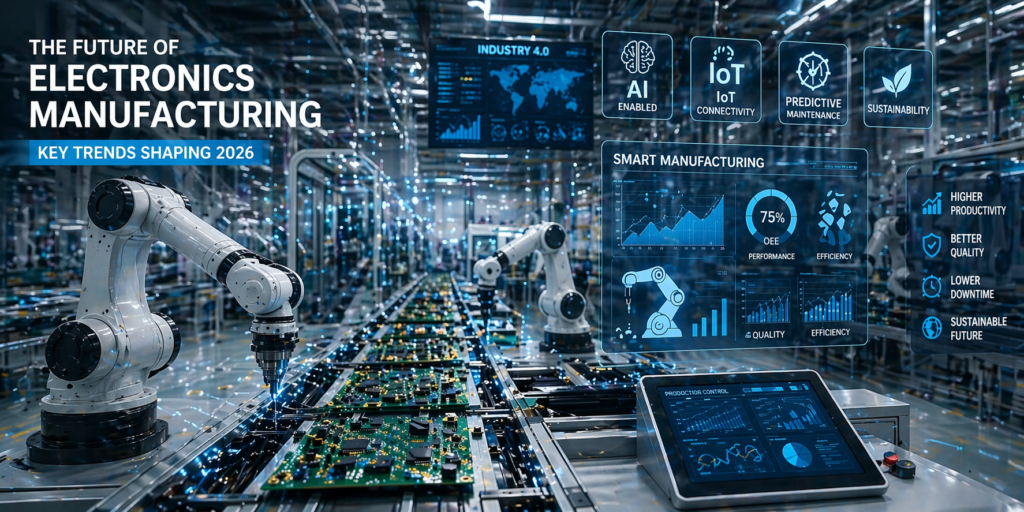
Smart factories powered by IoT and AI are becoming the new standard. Real-time monitoring, predictive maintenance, and automated workflows are improving efficiency and reducing downtime.
2. Supply Chain Localization
Global disruptions have pushed manufacturers to localize supply chains. Companies are investing in regional manufacturing hubs to reduce dependency and improve resilience.
3. AI & Data-Driven Production
Artificial Intelligence is now being used for:
- Defect detection
- Production optimization
- Demand forecasting
This reduces waste and increases production accuracy.
4. Sustainability & Green Electronics
Environmental concerns are pushing companies toward:
- Energy-efficient manufacturing
- Eco-friendly materials
- Waste reduction processes
Sustainability is no longer optional—it’s a necessity.
5. Advanced Robotics in Manufacturing
Collaborative robots (cobots) are assisting human workers, increasing productivity while maintaining precision.
Conclusion
The electronics industry is moving toward a smarter, faster, and more sustainable future. Companies that embrace these trends will lead the next wave of innovation.
CTA
👉 Stay updated with the latest industry insights by following Pioneer Horizon.