
Introduction
Surface Mount Technology (SMT) is a method used to mount electronic components directly onto the surface of printed circuit boards (PCBs). It has revolutionized electronics manufacturing.
SMT Assembly Process
1. Solder Paste Application
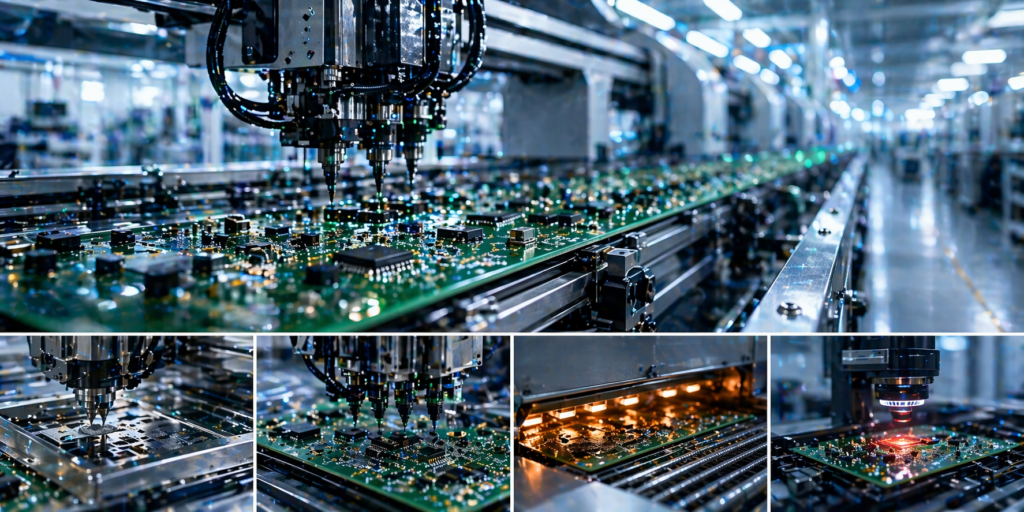
A stencil is used to apply solder paste onto the PCB.
2. Component Placement
Pick-and-place machines position components accurately.
3. Reflow Soldering
The board passes through a reflow oven where solder melts and bonds components.
4. Inspection & Testing
Automated Optical Inspection (AOI) ensures quality and detects defects.
Advantages of SMT
- Higher component density
- Smaller and lighter designs
- Faster production
- Cost-effective manufacturing
Applications
SMT is widely used in:
- Consumer electronics
- Medical devices
- Automotive electronics
- Industrial systems
Challenges in SMT
- Thermal management
- Solder joint reliability
- High initial setup cost
Conclusion
SMT assembly is essential for modern electronics production, enabling compact, efficient, and high-performance devices.
CTA
👉 Explore more PCB and assembly insights with Pioneer Horizon.